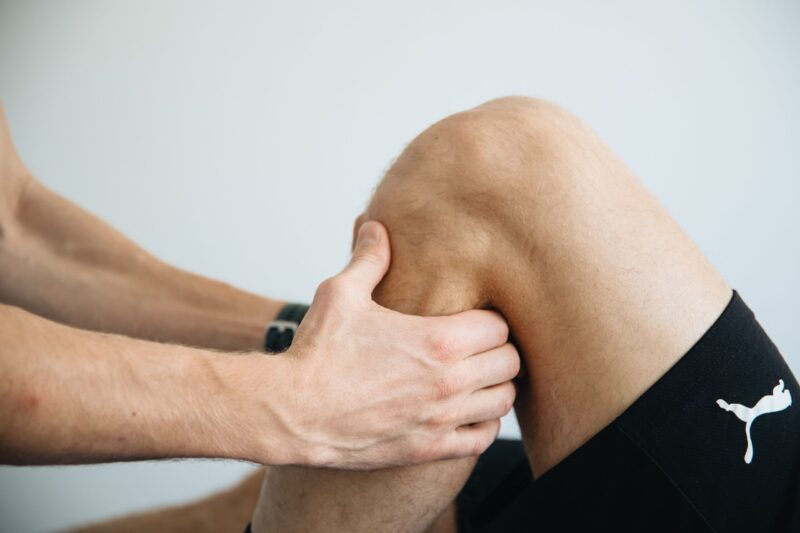


When your knee hurts, it is natural to focus on your knee. But the place where you feel discomfort does not always tell the whole story. Hip osteoarthritis can sometimes produce pain that travels toward the knee. This is one reason an assessment should consider your symptoms together rather than treating each painful spot as an isolated problem.
If you are wondering whether hip arthritis can cause knee pain, the answer is yes—but that possibility does not establish your diagnosis. For patients in Naples, the useful next step is to describe the pattern clearly and have a clinician determine what needs evaluation.
Why the hip belongs in the conversation
The National Institute of Arthritis and Musculoskeletal and Skin Diseases notes that hip osteoarthritis may cause discomfort in the groin, inner thigh, or buttocks, and that pain can spread to the knees. Clinicians use the term referred pain when pain is perceived away from its source.
That does not mean every sore knee comes from the hip. It means a knee-only explanation should not be assumed from location alone. Tell your clinician about symptoms elsewhere, even if they seem unrelated to the reason you booked the appointment. You do not have to decide which symptom is the most medically significant before asking for help.
For example, you might mention knee discomfort alongside difficulty getting comfortable in a chair. Those details are useful observations to discuss, not a home test for arthritis. Avoid trying to prove a diagnosis by forcing a movement that hurts.
Notice patterns without diagnosing yourself
Before your visit, make a brief note of where discomfort begins and where you feel it later. Include whether symptoms follow activity, appear after sitting, or interrupt your sleep. Osteoarthritis can involve pain, stiffness, and reduced movement, but those symptoms are not exclusive to that condition.
Write down what you actually experience: “My knee aches after a walk, and I also notice groin discomfort getting out of the car.” This is more useful than concluding that one joint must be responsible for everything. Your clinician can ask follow-up questions without needing you to know the anatomical terms.
If your usual routine has changed, describe the change. Perhaps you now choose a shorter walking route or need more time to dress. Concrete examples explain the impact on your day and help keep the discussion centered on your own priorities.
An evaluation looks beyond one painful spot
According to NIAMS guidance on osteoarthritis diagnosis, there is no single diagnostic test. A medical history and physical examination help guide the assessment; imaging or other testing may be appropriate depending on the findings.
Ask what the clinician thinks is causing the symptoms and which findings support that explanation. If imaging is recommended, ask what question it is intended to answer. Bringing prior reports can help organize the conversation, but ask the office which records it would like you to provide rather than arranging tests on your own.
A helpful question is: “Does my hip need to be examined as part of understanding this knee pain?” Another is: “Could more than one issue be contributing?” These questions invite a broader discussion without assuming that an examination will identify one simple cause.
Treatment follows the diagnosis
Finding a possible hip contribution does not automatically mean you need hip replacement. NIAMS describes a range of osteoarthritis management options, including individualized exercise, weight management when appropriate, and medication. A doctor or physical therapist can help determine which activities and treatments fit your health and symptoms.
Ask what the first treatment goal should be and how you will judge progress. Would you track walking tolerance, sleep, or another activity? Agreeing on a practical goal makes follow-up more specific than simply asking whether you feel better.
For background on surgical care, you can review the practice’s hip replacement information. Reading about an option is different from deciding that it is right for you. Discuss suitability, alternatives, risks, and expectations with the surgeon before making treatment decisions.
Know when to seek help promptly
Do not wait for a routine office appointment if you have severe hip pain following a fall or cannot walk or bear weight. Seek emergency assessment. A hot, swollen hip with fever or feeling unwell, or sudden severe hip pain without an injury, also requires urgent medical attention. These warning signs need assessment rather than an assumption that arthritis is the explanation.
The NHS overview of adult hip pain also advises medical review when pain affects normal activities or sleep, worsens, or keeps recurring. In the United States, use local urgent or emergency services as appropriate; call 911 if you need emergency assistance.
Bring the full picture to your Naples appointment
You do not need to solve the source of your pain before seeking care. Bring your symptom notes, a current medication list, and a short description of treatments you have already tried. Mention both hip and knee concerns so the appointment starts with the full picture.
To discuss persistent joint pain with Dr. Leon Mead in Naples, request an appointment or call 239.262.1119. The goal is an evaluation and a plan based on your findings, rather than a conclusion based only on where you feel pain.
This article is general education and does not replace an individual medical evaluation. Treatment and results vary.
Illustrative stock photo: Anastasia Shuraeva / Pexels. The people shown are not identified as patients of the practice.